With the subtitle “The Emperor’s New Clothes”, our program recognizes that Leadership often requires:
* Navigating ambiguous and novel situations;
* Understanding diverse perspectives;
* Making judgement calls based on ethical considerations.
These are areas where AI definitely struggles. Additionally, trust and rapport are critical components of leadership, which are built through human interaction and connection.
Will AI Replace Leadership? – The Emperor’s New Clothes Keynote
The big question is where does AI “fit”, or does it “fit” if tailored like a set of new clothes? AI has the potential to augment and enhance leadership, but it is unlikely to entirely replace it.
While AI can assist with data analysis, decision making and providing insights, it lacks emotional intelligence, strategic thinking, empathy and the ability to inspire and motivate others.
Using the analytical power and efficiency of AI technologies with synergy between human judgement, creativity and emotional intelligence, will indeed provide the Emperor with a very “fitting” set of new clothes.
“Everyone is in sales. It’s the only way we stay in business.”
Harvey Mackey’s observation presents you with an opportunity to insure everyone in your organization, private, public or non-profit help to raise your profile. Here are a few tactics to use:
* Ask colleagues for references to set joint meetings with their customers.
* Attend other groups meetings at your firm or company.
* Ask for prospect and industry research.
* Send copies of your updated bios, business descriptions, articles, etc. to your internal contacts.
* Evaluate specific community/NPO organizations to become active and gain leadership commitments for all co-workers.
* Look to develop joint-selling opportunities with your colleagues.
“Start where you are. Use what you have. Do what you can.”
– Arthur Ashe
David Packard’s experience as co-founder of Hewlett Packard calls for marketing to be undertaken by all members of an organization. Virtually
* People
* Organization
* Website and Social Media
* Incentives and
* Marketing and Business Development
all relate to what a well-organized and staffed marketing department should be accomplishing.
Every Marketing Director should also have sales experience. After all, marketing is “getting found” while business development is “sales”. In Packard’s opinion, sales should be driving marketing.
For Leadership and Revenue Acceleration Keynotes and Seminars – www.closersgroup.com.
To achieve long lasting leadership impact and sustain major increases in revenue, schedule a Keynote or Seminar now.
THE CRAZY IMPACT OF LEADERSHIP
A Memorable Keynote
In this Keynote the audience is taken through orchestra leaders and Prime Ministers, from Google to kings. And each in their own way has differentiated between leadership and exceptional leadership by actually and continually following my Six Laws of Exceptional Leadership in the book, THE CRAZY IMPACT OF LEADERSHIP, Published by Made For Success, Sammamish, Washington.
Leadership is a highly focused activity that must be internally orchestrated. Leaders must decide what advice to take, determine which of the available tools and strategies will work, assign implementation tasks, hold people accountable, weigh risks and consider the impact of a future legacy. These are the exceptional leadership tasks we discuss in detail:
Listening;
Making Decisions;
Communicating;
Fostering Accountability;
Taking Risks;
Leaving a Legacy
THE PROFIT LAB – Results-Driven ½ Day Seminars
21 Boosters to Accelerate Revenue
Dr. Colman crafts a compelling reason for the audience to perk up and pay attention to the keys of revenue acceleration. The Profit Lab distills unique methods for bringing in more dollars from what companies are already doing as well as what they are not doing. Proven by Dr. Colman’s extensive 30+ year career in sales consulting, he explains how anyone from seasoned professionals to start-ups can see 60% to 200% revenue growth within a year.
Revenue Growth is all about what type of “Accelerators are needed to help business leaders and non-profits outpace competitors and hit record sales all the while establishing a culture of innovation. Seminar segments from Allan’s Book, THE REVENUE ACCELERATOR, published by Made For Success, Sammamish, Washington, include:
Are you Kleenex or Tissue?
What should your marketing plan address?
Are you listening?
What is your #1 key competitive advantage?
Are you identifying hidden opportunities?
THE 90-DAY REVENUE SPRINT
2-3 Hour “Revenue Catapult” Program
The “Sprint” is specifically designed for speed and rapid revenue growth. It is NOT about kissing more frogs. It is NOT marketing. It is sales execution to accelerate revenue. It is actions, not plans. Using a simplified graphic, lead-generating approach, visualizing the most important leads, is the fundamental key to success in a revenue sprint. A 2-hour educational video, The 90-DAY REVENUE SPRINT, produced by Made For Success, Sammamish, Washington, provides background and training skills.
Completing this program provides the attendees with:
Rapidly increasing new business;
Doubling the number of meetings and prospects;
Finding and using hidden assets.
CEOWORLD magazine – – CHIEF EXECUTIVE INSIGHTS Top Stories –
Part 2 of 3.
Many More Tips for Building Trusting Relationships with Customers and Clients
Deal with customer/client problems immediately. Give immediate attention and action to any problems or complaints. While client dissatisfaction is never comfortable to handle, you must work to become aware of and take action on problems long before a client disengages. Even when they may seem insignificant, deal immediately with even the smallest issue that arises.
Acknowledging it and fixing it quickly leads to a higher level of trust. Once the problem is resolved, let your customer know that you took care of it. Then, when you check in periodically and ask if they have any pending problems or issues you can assist with, you subtly remind them of your previous, positive actions. It’s a form of invisible marketing. Take action, win back their trust, keep the relationship strong and you’ll receive their return business.
Refer others to them. Referring business to your client not only continues building trust, but demonstrates another form of invisible marketing. You are showing confidence in them and your trust that they will work well with your contacts. Introducing them to your other clients and customers and helping them build their business is a sure sign of your trust in them and it’s likely that they’ll reciprocate.
Utilizing these tactics to build trust with clients, customers, and prospects will result in win-win business partnerships. Showing that you’ve listened to their needs and can offer solutions to help them thrive, referring business to them, applying invisible marketing techniques, and adding benefits to their engagement with you will enhance your relationships, your reputation, and that of your company.
Your efforts will be recognized and rewarded with future business.
CEOWORLD magazine – – CHIEF EXECUTIVE INSIGHTS Top Stories –
6 Tips for Building Trusting Relationships with Customers and Clients
Part 1 of 2.
Trust builds sales. It drives high engagement, successful delivery, repeat sales, and quality referrals. Demonstrating a high level of commitment and support builds trust and is an absolute requirement for success as an entrepreneur. Coupled with listening, building trust remains the most important tool to win sales and maintain client relationships.
Prioritize relationship building early in the development stage of your new product or service. Employ multiple tactics to get to know clients/prospects. These same tactics will also help them to better know you and the services you offer.
Understand their needs. Learn what type of communications they prefer from you and what you can expect from them. Do they prefer emails, Zoom conferences, texts, talking by phone? The more you learn about each other, the more you build trust.
Become attuned to how their business operates — including the need for their own ethical compliance in client/customer-specific activities. In doing so, an important reversal occurs: They may stop worrying about whether to deal with you and begin worrying about what might happen if they don’t.
Become a business partner with your customers or clients. Become a valued partner by offering rewarding solutions to the issues they’re facing. These solutions may be profitable for both you and the customer. Make sure to protect the prospects’ and clients’ interests when partnering.
See Part 2. in our next post!
Your efforts will be recognized and rewarded with future business.
Part 2. “MARKETING PROFESSOR’S BOOK PROVIDES BLUEPRINT
FOR ENTREPRENEURS”
California State University Dominguez Hills
From interviews with entrepreneurs you conducted for the book, you developed 21 accelerators. What are your essential tips for how to sell a product or service?
The biggest thing is listening. By not listening and just thinking about what you want to say, you miss opportunities to gather important information. In asking good questions, you find out what people’s needs are and how you can meet them. You convert their needs to your values.
The second thing is trust. Trust builds sales. It drives expectations, successful delivery, repeat sales, and referrals. One example of how to do this is by immediately dealing with customer dissatisfaction. Acknowledging it and fixing it quickly can lead to a higher level of trust. Once a problem has been fixed, and fixed quickly, occasionally remind your customer you did so.”¯It’s another form of invisible marketing.”¯
Third is developing your Unique Selling Proposition (USP). What do you have to offer that people can’t get anywhere else? Ask peers, prospects, friends and family to weigh in. Your USP should be the core message for all your marketing and sales efforts.
Fourth is always building relationships. Where do you have people that you’re meeting on a regular basis? Maximize your networks. Do you belong to a Chamber of Commerce, a PTA, or the YMCA? Let people know what you’re doing. It’s a perfect opportunity and costs you nothing.
Colman is a speaker, author, and CEO of the Closers Group, a business development advisory. He teaches Principles of Marketing (MKT 350) and Marketing Management (MKT 459)
The Great Resignation–which has seen millions of workers quit or change jobs since the start of 2021–has set the stage for a surge of new entrepreneurs. However, as startups have an average survival rate of only 20 percent, they are highly risky. Mistakes are costly and common, especially among the inexperienced.
To help early-stage ventures avoid these pitfalls, CSUDH Adjunct Professor of Marketing Allan Colman wrote The Revenue Accelerator: The 21 Boosters to Launch Your Startup, published in August 2022 by Made for Success and Blackstone Publishing. Drawing on interviews with dozens of start-up entrepreneurs and business leaders, plus decades of his own business development experience, Colman provides an essential companion guide for entrepreneurs looking to make the leap from building their product to selling it–and shares some key lessons here.
You mention a potential surge of entrepreneurs in the U.S. What are some shifts we’ve started to see already?
First of all, there’s the Great Quit, as I call it. A significant amount of people who have left their jobs will be looking to start their own business. On top of that, there is a huge increase in people aged 55 and older who have already retired, or will soon be retiring–many of them may pursue entrepreneurship to earn extra income. Lastly, since the COVID-19 pandemic, there has been a big drop in the number of women in the workforce. We’re seeing new entrepreneurs from each of these groups.
In your opinion, why do start-ups struggle to survive?
The experts I interviewed were unanimous: the biggest problem they see is entrepreneurs not researching whether there’s a market for their product or service. If they don’t look at the market before they start, they’re already really behind.
Once a new entrepreneur knows there’s a market need for their product or service, they need to find out where they can get free assistance–from development centers, the U.S. Small Business Administration, and community college programs. There is a huge amount of free and low-cost advice for startups.
Did you know? CSUDH’s Innovation Incubator offers a variety of free and fee-based programs and courses for students and community members looking to start or grow their business.
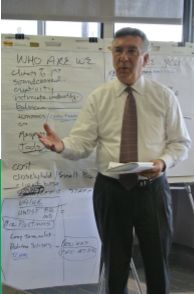




With the subtitle “The Emperor’s New Clothes”, our program recognizes that Leadership often requires:
* Navigating ambiguous and novel situations;
* Understanding diverse perspectives;
* Making judgement calls based on ethical considerations.
These are areas where AI definitely struggles. Additionally, trust and rapport are critical components of leadership, which are built through human interaction and connection.
Let’s move on and analyze where AI fits – https://lnkd.in/gbtn_VFQ